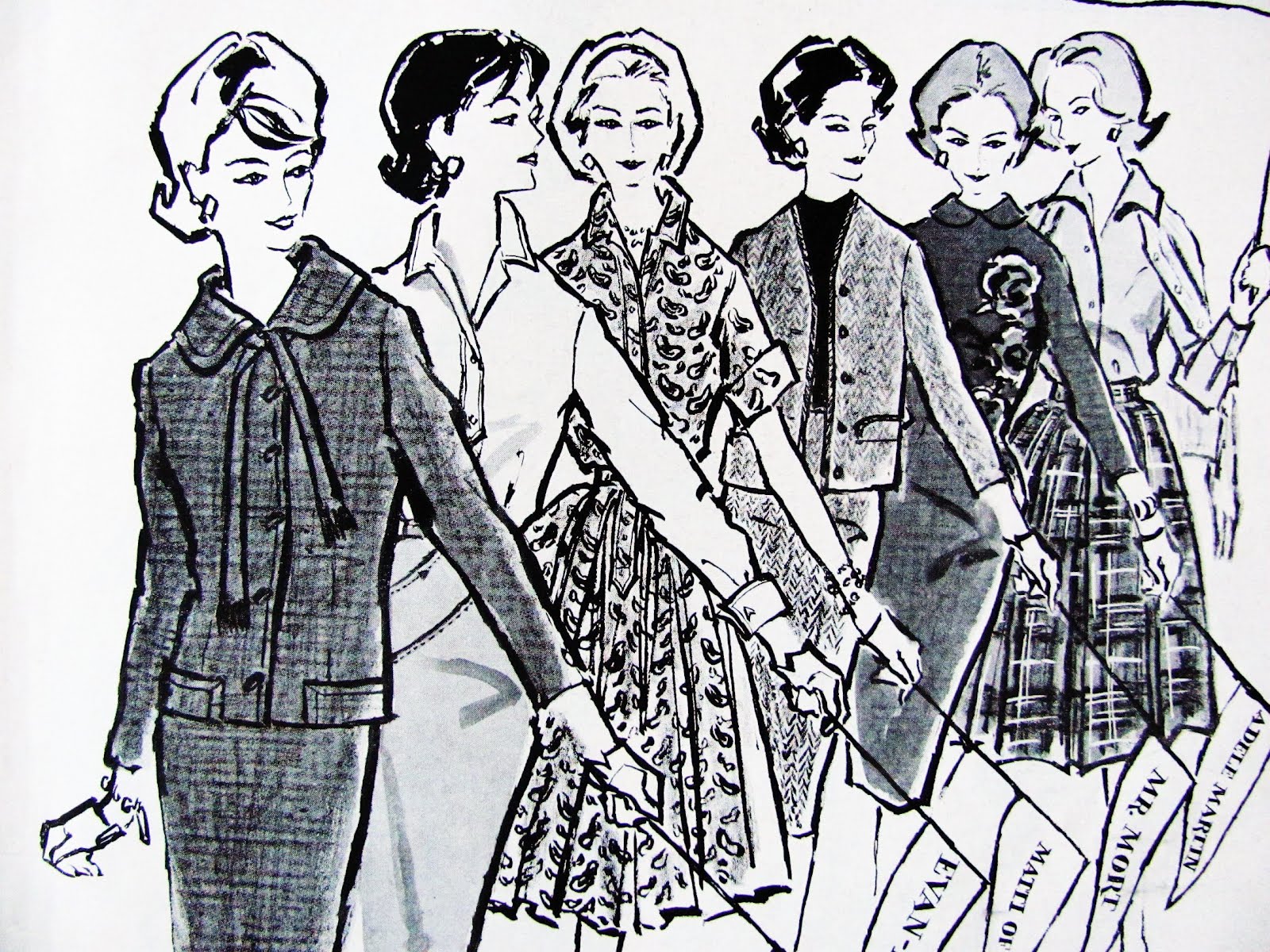
Dramatic strokes in black create impact and visual texture in these magazine illustrations for several Simplicity sewing patterns from the mid 1950's.
Deep black strokes of what is probably charcoal are seen on a textured paper that make for a high energy composition with rough lines. In creating the illustrations, the artist developed the color areas first, probably using opaque gouache, a water soluble paint. Details were left out in the high light areas so that the overall effect wouldn't be flat or even. The body and face are colorless as well, giving the garment full focus in the layout. Over this first layer of color, black strokes were then applied. Finer ink lines from a pen then detail the faces and garment structure.
This illustration technique is developed from a well defined primary illustration that is layered under the top illustration paper, creating a guide for the artist to use as the color, then black lines are applied. Often a light table is required so that a thicker, more textured illustration paper can be used for the final work.
Today fashion illustrators often use markers and marker paper, layering their primary sketch under the marker paper. It would be used as a guide when applying marker ink strokes to the top layer of marker paper.
I thought it might be interesting to compare the first illustrations to these simple yet stylish versions of the same garments. They are illustrations from the original pattern envelopes. You can see how these versions are very simple, with clearly shown details and garment seam lines.
But even so, the green shirt waist dress (Simplicity 3848) does present an 'attitude' and bring style to the garment presentation. The more simple red candy striped dress in the first example (Simplicity 3857) uses a quick repeat of the figure stance for the second figure which allows that illustrator to 'whip' out the illustration quickly. The white blouse in that illustration is shaded with an india ink wash (black ink, diluted to grey with water).
The dark green sheer shirtwaist in the lower illustration also uses a wash, this time water color or gouache is diluted with water so that it appears light and sheer like the fabric. In the first set of illustrations, the magazine illustrator presented a more dramatic interpretation of this dress, with bold red gathers and a the bodice lining that is clearly defined.
Envelope illustrations provided the backbone of the pattern industry throughout the 1950's. Inspiring to their readership, more dramatic illustrations gave a woman's magazine the opportunity to suppliment expensive fashion photography with dreamy illustrations for their readers to view.
Since I posted this popular article, I have added more fashion illustrations from the 1950's. You may want to check these out as well:
Cocktail dresses, 1958
Back Views of cocktail dresses, 1958
Dagmar, the illustrator
Count Rene Bouet-Willaumez (RBW)



 1958 fashion illustrations from "Modes Royale" a pattern magazine of European designs for the home seamstress.


 1958 fashion illustrations from "Modes Royale", a pattern magazine of European designs for the skilled seamstress.


