Saturday, September 14, 2013
McCalls 7126: 1961 Sewing Pattern for Research & Inspiration
Dated 1961, this home sewing pattern by McCalls 7126 is a great example of sportswear in the early 1960s. This look was a bridge between 1950's silhouettes where an hourglass figure was important, to the loose "A" line and 'hip hugger' silhouette of the later 1960's.
There was a strong Asian design influence through out the 50's. Starting during the WWII era, this trend was influenced in part by American fashion designers Claire McCardell, Rudi Gernreich, Bonnie Cashin and others. Their work often shows very simple tunic styles over a slender trouser, as this sport set from 1961 shows. The feature here is a very flat tunic top design with classic front slit down to a 'yoke' seam line across the upper bust line. Hinting of a smock or peasant top, this was a popular look for both resort and sports wear.
Of additional interest are the fabric colors: blue and green. This combination was growing in popularity during this time influenced by bright tropical and Asian color schemes. Often these were seen in strong graphic and abstract floral patterns such as those from the popular Scandinavian design house Marimekko. A flat tunic top was the perfect shape to showcase these colorful and graphic textiles.
The schematic drafts of this ensemble show clearly how the back views appeared and how the patterns were designed. It is interesting to see that what appears to be a casual dress made by belting a longer version of the tunic, is actually a fitted skirt with the bulky tunic tucked into the waistline.
The bodice of the tunic is artfully fitted with a dart shaping that has been integrated into the horizontal mock yoke seam line. This would reduce extra underarm bulk and help the side seam to hang neatly.
This pattern design has potential today made up in solid linens, larger scale prints and graphics. The clean lines and simple shaping are perfect for our current silhouette trends, worn with slender pants or leggings.
Wednesday, September 11, 2013
Vintage Bridal Gowns: on view at the Pasadena Historical Museum
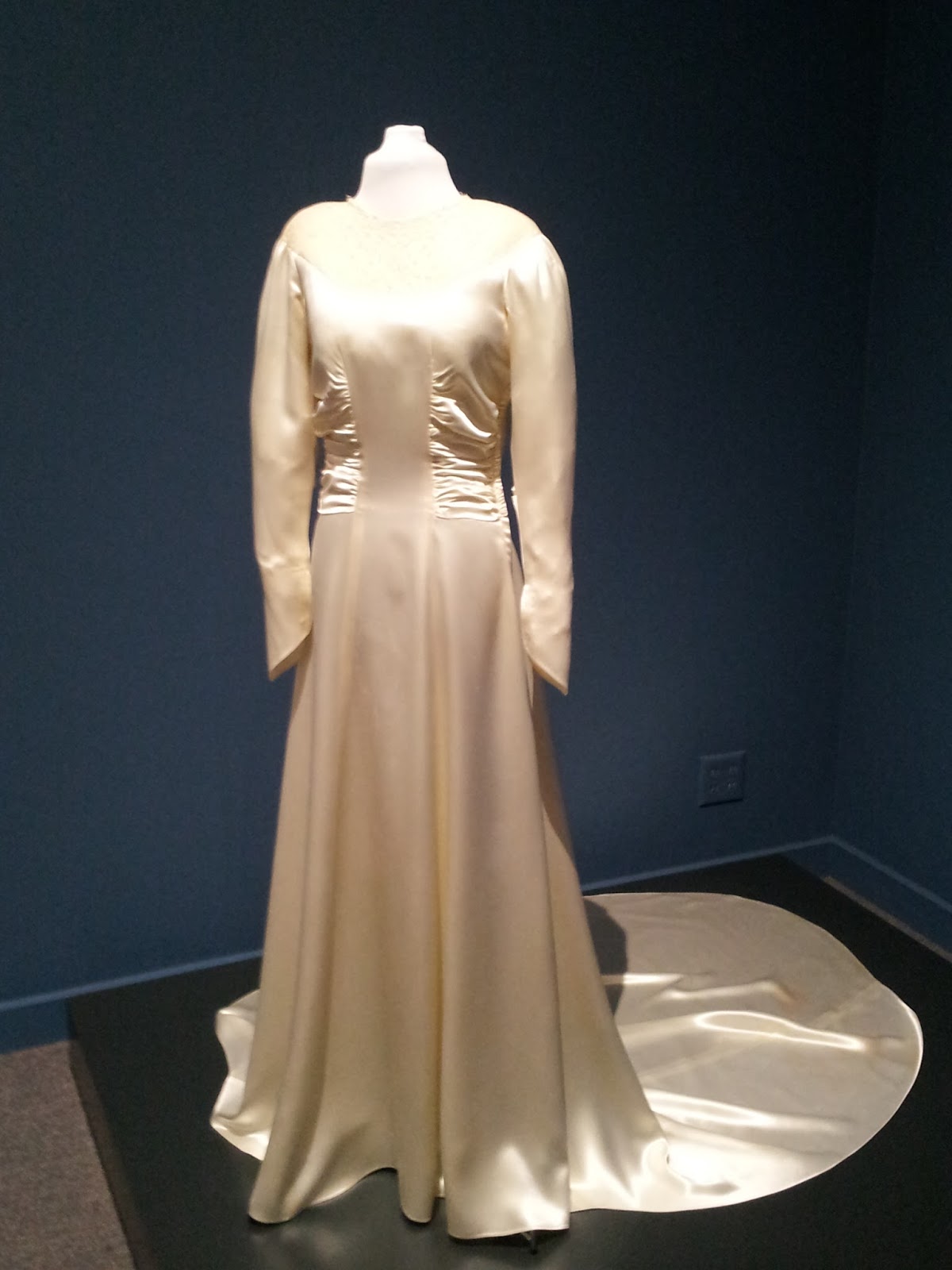
This lovely satin bridal gown opens an exhibition of wedding dresses currently on display at the Pasadena Historical Museum. Carefully edited, this collection of gowns shows bridal designs from the WWII era through current styles as worn by brides from Pasadena.
This first gown shown was designed and sewn in 1944 by Seamstress Auntie Nui of slipper satin. It was worn by Chiyoi Marumoto Ogawa, one of the young women who were married in the WWII Japanese concentration camps here in California. This dressmaker went on to provide many more gowns for the brides in this camp, as well as in Pasadena after the war. Typical of all gowns during the war tie, it is a simple dress with long sleeves and flattering shirred bodice that was typical of the draping worn during that era.
The post war years saw an explosion in marriages as the GIs returned home again. While the expense of a wedding gown was often beyond the budget of many young couples, wedding gowns grew in importance. Often one gown would be shared by many brides. From 1948, this gown by bridal designer William Cahill of Beverly Hills shows what the best in wedding gowns looked like. Of shiny slipper satin, the neckline is framed in a lace bertha collar. Like most gowns of this time, it has modest long sleeves suitable for wearing in church. This dress was worn by bride Jane Campbell Wells of Pasadena.
Of special local interest, this gown was the first bridal ensemble sold at Bullock's, Pasadena when it opened in 1948. Later this high end chain of department stores would be sold. Now the original building is owned by Macy's, who recently rehabilitated the architecturally significant building.
This curvy 1952 Cahill gown of nylon lace and tulle was paired with a small, fitted lace skull cap that had a veil attached. It has many features similar to crinoline gowns of the mid-1800's. The silhouette has a dramatic shirred "V" neckline and the classic "New Look" hourglass full skirt. The ensemble was worn by bride Marilyn Hubbard Roberts.
In 1955, the Governor of California's daughter Carolyn Knight Weedman wore this William Cahill gown for her wedding in the governor's mansion, Sacramento. It shows alencon lace, satin, and silk chiffon. The lace bodice with Elizabethan collar is fitted, with long sleeves and an hourglass silhouette that has a dropped waistline with a slight curve in front. To create the ballerina length skirt (which Cahill was famous for designing), there were four layers of fabric: silk chiffon with decorative stitching (top layer), nylon netting nylon bobbin net, and ribbed acetate (slip layer).
From 1958, this dramatic debutant dress with draped skirt and textured bodice by Cahill shows how far formal gowns evolved in just a few years. The gown of silk taffeta has a draped bubble skirt with train in back. The bodice is textured with layers of fabric flower petals and dips low in the back. It was worn by Janet Curci who wore a silk and tulle, beaded gown for her wedding later in 1962.
This exhibition of wedding gowns is displayed in the galleries of the Pasadena Historical Museum. The show also includes gowns from the 1960s to present day. The museum itself is worth a visit, as it is on the grounds of a large mansion located on the famous Orange Grove section of old Pasadena. This exhibit is on view through November 3, 2013.
Monday, September 9, 2013
Fall Fashion, 1949: Claire McCardell does Tartan Plaids
Taking a look back to the fall of 1949, fashion of the late 1940s was showing dramatic and inventive silhouettes that followed Dior's New Look. American designers such as Claire McCardell would see a huge rise in their fashion star as the post war economies allowed for greater experimentation and design creativity than had been possible during the war years.
Back to school fall fashions have always included plaids in the mix. Warm wool plaids would appear in the fall magazine issues that hit newstands during the hottest weeks of late summer, providing the reader with an exciting change from hot weather wear.
While the classic, preppy kilt and other plaid skirts seemed to dominate, there have always been those who explore plaids just a bit further. Case in point: Claire McCardell's knife pleated plaid dress on the left with push up sleeves and a dramatic shawl collar (Miron worsted wool, $59.95 at Lord & Taylor). On the right is a dress designed by Dorothy Cox. Her design shows a traditional plaid made up as a wonderful cape collar over a circular skirt ($55 at Henri Bendel). Both are from the fall of 1949, when skirts were wide, hems longer, and gorgeous textiles were becoming more plentiful. These would be the seed of style for the next decade to come, the 1950s fashion silhouette.
Monday, September 2, 2013
Simplicity 6387: 1966 Sewing Pattern for Research & Inspiration
Vintage Sewing Pattern: Simplicity 6387, date: 1966, item: Dress and Coat, size: half-size pattern
This simple sewing pattern is the first in a series showing an historical or vintage commercial home sewing pattern envelope in detail. As part of an ongoing project of mine, I will be sharing pattern covers from my collection for research and design purposes. It is hoped that by posting these online, designers, collectors of vintage fashion, sewing patterns and periodicals may be able to use this information for dating apparel, photos and garments. The cover illustrations also provide examples of how this garment style would have been worn in its day, complete with accessories, makeup and hair style.
BACK INFORMATION
One-piece dress and coat in women's sizes and misses' and women's half-sizes:
Sleeveless dress with slightly lowered round neckline and back zipper has an A-line skirt. V.1 has self or purchased belt, Lined. V.2 has purchased belt, Lined coat with slightly lowered round neckline has below-elbow set-in sleeves. V.1 is top-stitched, V.2 has novelty braid trim.
Suggested fabric types--V.1 in cottons and blends: pique, linen, silks, synthetics and blends: brocades. V.1 coat also in lightweight wools and blends. V.2 dress and coat coat in lace, eyelet and sheers only.
DETAIL PHOTOS
This pattern is available for purchase in my shop: PintuckSew on Etsy
Friday, August 30, 2013
Downton Abbey Wedding Gowns: on exhibit at the FIDM museum, Los Angeles
The two 1920s era flapper wedding gowns from Downton Abbey are now on display at the FIDM gallery in Los Angeles. They are part of a larger exhibit on television costumes from various current shows, but we found the Downton Abbey costumes to be the most interesting.
This exhibit is an opportunity to settle once and for all, which wedding gown is the best. We could take a really close look, since the gowns are only a few feet away. It was great to see the soft hip drape, flowing drapery and subtle decorative details we could barely take in when they were worn during the last season as designed by costumer Caroline McCall. The two other gowns shown in this photo are also on display, along with many others worn by various characters in this series.
Seeing these flapper styles got us hungry for more, and to our delight, the adjacent historical gallery is currently showing part of the Helen Larson collection, and features a group of amazing 1920s beaded chemise evening gowns.
The dresses shown here are the real thing (not costumes), with a few Chanel designs to validate the set. Included in the full outfits shown on display forms are seamed stockings and exquisite leather shoes. This little gem of an exhibit is one of the best costume shows up now in southern California. It's something any vintage fashion junkie should not miss. You'll find this gallery hidden down a hall off to the side from the television costume show.
the DETAILS:
What: “The Outstanding Art of Television Costume Design”, 120+ costumes from more than 15 television shows from the current season
Also Featuring: Behind the Candelabra, Game of Thrones, Girls, House of Cards, Nashville, Scandal, Parks and Recreation.
Beaded Dressess: Gatsby’s Women: 1920s Evening Dress from The Helen Larson Historic Fashion Collection
Where: Fashion Institute of Design and Merchandising (FIDM) Museum & Galleries, Los Angeles
When: 10am–5pm, Tuesday through Saturday, through October 19, 2013, admission is free
PS: When you are there, be sure to visit the FIDM outlet store that carries donated fabric, accessories and fashions. We found some great pieces of fabric there to use later in some sewing projects.
Monday, August 19, 2013
Lanz Swimsuit from the 1960's: A Closer Look
This cute pink cotton swim suit by Lanz Originals is from the early 1960's. It has several features that help to create the fitted silhouette. It was cut with a bodice that has princess seamlines. Each has been boned to help the bodice stay in place. The front buttons are faux, since there is a metal zipper in the back.
The bottom shorts also have princess seamlines (in the back) that help to shape the fit. These are cut with darts in the front. Because cotton shorts can't be cut to fit skin tight like a knit, there are simple cotton bloomers as lining (for modesty).
California fashion with the Lanz brand was a high end junior label that was most popular in the post WWII era through the late 1960's. The company was mostly a dress line known for its simple silhouettes in Swiss cotton prints that were accented by trims such as ric-rack, piping, bows, velvet ribbon and rows of tiny buttons (most often covered to match). Their sportswear tended to carry over the dress quality into sport garments like this swimsuit.
The details seen in this swimsuit are identical to the dresses that this label produced, including the tiny buttons, piped seamlines and the pastel cotton mini-print. It is likely that a white cotton shirt was included as a coverup.
This dress maker style of swimwear was popular throughout the 1940's, 50's and early 60's when many suits were made from woven cotton fabrics. This swim suit is fully lined in white cotton, which will prevent 'show through' while swimming, and keep the seam lines from unraveling later. The fitted and boned bodice would keep the figure looking fashonably trim as well, whether wet or dry.
Here are some views that show the details more clearly.
Wednesday, August 14, 2013
1920s Flapper: Face powder & Traveling in Style
Flapper on vacation! Traveling this month? This mid-1920's advertisement for face powder captures the luxury of travel on the great ocean liners, or even a ferry boat. The ad states, "In all countries and in all climes- on land and on sea--Bourgois" This is Java face powder by A. Bourjois & Co., New York and Paris.
Traveling in style, her outfit has classic details: deep buttoned cuffs, high buttoned collar and a low slung cloche style hat with a bit of her bob peeking below the brim. Wrapped up against the ocean breeze, only her nose needs a bit of powder.
Wednesday, August 7, 2013
Menswear and Dandys: 19th century Tailored Suits as Inspiration
Tailored menswear from the 19th and early 20th centuries, is back in the public eye. The current dandy inspired revival may have developed in response to the Steam Punk trend and a few recent feature films that were costumed in 1800's silhouettes. It appears that traditional men's tailoring and accessories are having the biggest interest since the dandies of the 1960's.
One contribution this season is the exhibition at Rhode Island School of Design: "Artist/Rebel/Dandy: Men of Fashion" on view now through Sunday, August 18, 2013. The grandfather of contemporary men's tailoring, Beau Brummell (1778–1840), is a key figure in this trend. When I think of Brummell's style, I am reminded of another important exhibition "Fashioning Fashion: European Dress in Detail, 1700 - 1915" presented at the Los Angeles County Museum of Art in the spring of 2009.
The photos posted here are of men's tailoring dating from this era, taken by me at the LACMA exhibit. The exhibition's selection was inspiring and it details what men wore then, and how those items were worn. This was an opportunity to study both the full silhouette and the closer view. Of equal importance are the accessories: hat, shirt, neck wear, shoes, stocking, gloves and cane. I have labeled each type of jacket so that the subtle differences in cut are made more obvious.
If you haven't seen the film "Beau Brummell: This Charming Man", you will want to watch the dressing scenes and see his layered wardrobe. This film gives us an inside view into how the excessively ornate apparel style of European gentlemen was changed forever to the more subtle dark tailored wools in the English tradition by Beau Brummell.
Sunday, August 4, 2013
Rosie the Riveter: Vintage Inspiration
I love the 1940's working girl styles that are being revived: bib-front overalls, side button wide leg pants, little shirts with button fronts, and head scarves. These WWII style coveralls are a cute way to look casual and vintage.
It could be the success of "Land Girls", the BBC series that has been such fun to watch that started the trend. Or maybe it's just the overall popularity of the 1930's and 40's that has opened up a new fashion look.
A few bloggers have been instrumental in showing us how these women dressed. "Unsung Sewing Patterns" has a great feature on women's work wear. This blog is full of inspiring work clothes and other styles from the past, not just fashion trends, so explore it to find more great details in apparel. Another great blog, "The Vintage Traveler" has regular features on workwear and sporting apparel. This article on overalls has great images and information on how women have worn denim and sportswear in the past.
If all of this has gotten you wanting to try a sewing up your own denim overalls, you might want to start with this new vintage inspired sewing pattern over at Eva Dress Patterns. It's got alot of cute details like side buttons and a full bodice upper body (not a bib front).
There are some great photos from the WWII era from the Library of Congress showing women working in the aircraft factories. These show us clearly how these women coped with dressing for the job. One well known image shows a worker in yellow coveralls with button sides at work. It's an inspiring photo on many levels. A quick bit of research will also bring up the one-piece coveralls worn by women. The Library of Congress set of photos has images of these as well.
If you are a difficult fit and want to sew your own overalls, try starting with a pants pattern that has a natural waistline, then adding either a bib front or full-body bodice to the pant waistband. In researching old photos, it is easy to notice that the crotch seems deeper or lower than how we wear pants today. This type of fit allows for more movement and reach. A tighter pant can be restrictive when attached to a bodice.
Here are a few easy to find sewing patterns that can be 'hacked' into this WWII overall look. I found pants with a true waist and princess bodices that could make up the bodice. You will have to add the side button (or zip), pockets and shoulder straps. I would suggest making up the entire pant with waistband first, then sewing the completed bodice to that waistband after a fitting, that way it can be adjusted to be the most comfortable to wear.
Bodice (from dress patterns): Simplicity 8864, Kwik Sew 3783, and McCall's 6646
Pants/Trousers (with true waistband): Vogue, 2532 view C, Kwik Sew 3363
The image here is an Etsy 'treasury' that I composed from Etsy items. If you like any, just click on the image and it will take you to that listing (have fun)
Subscribe to:
Comments (Atom)


.2.jpg)

.5.jpg)
.jpg)


