Tuesday, September 18, 2012

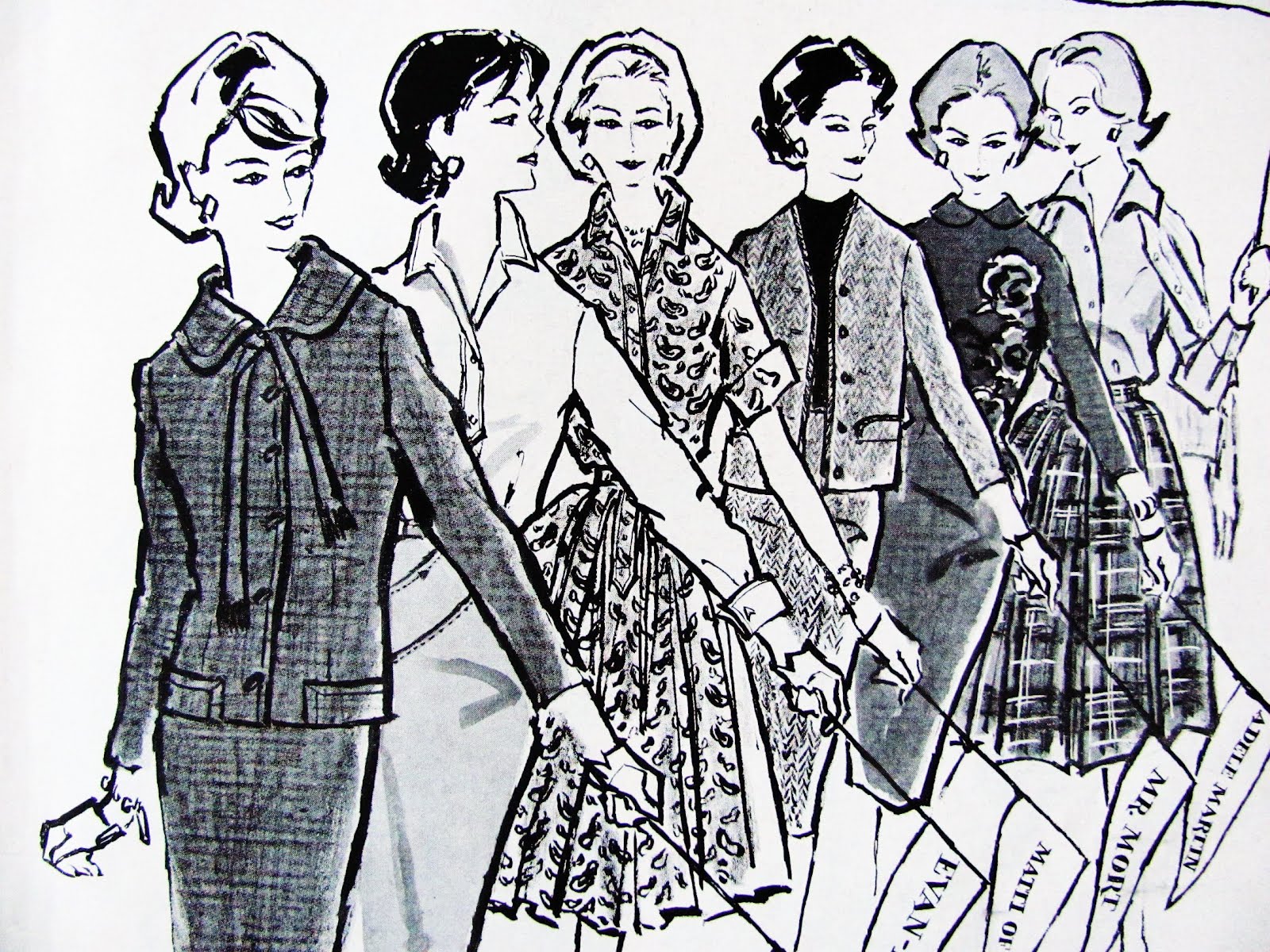
Back to School Fashions, 1959


Gotta love how the 1950's and 60's were so excited about 'back to school' and fall fashions in general. That was always the thickest magazine issue of the year. I guess after a summer of old cotton dresses, new wool Chanel-style suits, crisp paisleys and plaids were a sight for sore eyes.

Sunday, September 16, 2012

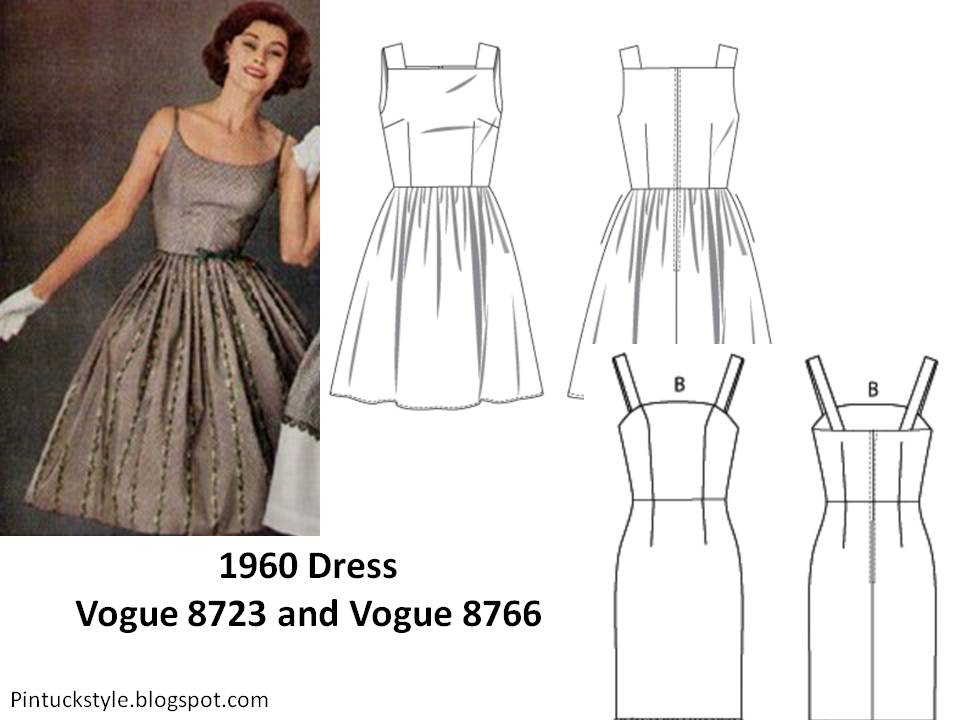
1960 Dress Style: How to Get That Look


Aren't these classic dresses from 1960 cute? They are from a Penney's department store advertisement. The dresses are cotton and use a black and white gingham check. What makes each one special are the details: pockets, borders and banding trims.

When you plan to sew a dress like this, designing the details are half the fun. This ad has very simple dresses when you look at the cut and style, yet the details make each one seem interesting and stylish. All of these elements would be easy to copy using a pattern that has the basic fit.


1960 Dresses: I found some current fashion patterns that could be used to sew up your own dress in this early 1960's style. What I looked for were fitted bodices with either simple darts or princess seam lines. For a curvy figure, those princess seams are best, since a clean fit can be shaped down the bodice dart in front. More slender figures can use the simple darted bodices.


It isn't easy to find a current dress pattern with a fitted bodice and gathered skirt. You may want to make your own full skirt. Many of the best full skirts are about 3 yards around, or 108". This was probably due to the fact that their cottons were sold in 36" widths. They would cut 3 panels that were the full fabric width and sew them together down the selvage edges for each skirt.

Some skirts are gathered, others are "knife pleated". These are the small pleats you see in dresses that tend to 'flatten' the skirt around the waistline. For many, this results in a more slender look at the waistline.

Yardage: How much fabric do we need for a full skirt?
1. Measure your length from waistline to hem.
2. We want about 108"(36" x 3)around for this skirt. If we use current 42" wide fabric, we need 3 panels. Two would be the full fabric width, but the third panel is going to be only 24" wide. If your fabric print is large, you may need to make adjustments to plan for the motif.
3. For each panel, add 2" for the hem and 1/2" for the seam allowance around the waistline. This means that yardage for a skirt with three panels would require: 3X length + 7.5".

Next we will look at how to get our details and trims to have the same cute look!

Saturday, September 15, 2012

NY Public Library: Fashion in the Files


Here is a fashion design from 1939 that includes both front, back and schematic views. You can find more like this in the New York Public Library digital gallery collection. Just enter your search terms. "Costume", "fashion", "sewing" are some good terms to try out. If you use an image, be sure to credit the collection. When it comes to eras, the entire 20th century is often a single category (rather than by each decade).

In this collection you will find more fashion designs like this, book illustrations, and photos. The Andre fashion illustration collection from the 1930's and 40's is a great style resource for that era. The designs include coats, suits and dresses by the Andre Fashion Studios. Most are from the 1930's. This is a huge collection of 5,415 images (so plan to fall down the rabbit hole with this link!).

Saturday, September 1, 2012

1963 Swimsuit Design: Rose Marie Reid advertisement


Super cool 1963 swimsuit design with a flirty Flapper look by California designer Rose Marie Reid, whose fabrics and designs forged new silhouettes in traditional swim wear fashions. Her innovative approach for this blouson swim suit pre-dated the bra-less era by nearly 5 years. Her style parallels that of Rudi Gernreich who worked in the same locale at the same time.

Magazine ad reads:
New minimum of maillot that blousons into a stained glass print of Helanca nylon knit! Rose Marie Reid does the look without a bra. Wear it with your own if you still want to after the delight of wearing it au naturel. "Glissando" $25.95. The glowing print by Soptra

Tuesday, August 28, 2012

Let's Talk About: Mood Boards


It looks like summer is winding down. Not that the weather is changing, but September is almost here, and those leisure free days are at a premium. It's time to start thinking about dressing again: wearing more than a brief dress and flip-flops.

This wonderful photo of the 1940's "New Look" is so inspiring. It's a "Vogue" cover from 1948, and so much of what we see here is on trend for the coming year. The overtones of gray, the slightly Victorian air to her look, the vintage mirror and cool men's hat, gloves and umbrella all tie this theme together.

Why not make a mood board showing a current fashion trend you like. Start by gathering up photos of inspirations, colors, fabrics and trims to create a design direction for your own 'look' or wardrobe. It's fun to start with a photo you like, then bring in elements that support the look you are going for.


Here is the original 1948 photo with my fashion inspiration from it. I used current color and style trends to put this together. I found the coat design at Butterick 5824 This coat is a new retro style designed by blogger Gertie. The wonderful soft orange-red tea rose is from FairytailFlower on Etsy. The jewelry photos are of vintage pearls, necklaces and other accessories that helped me to visualize this 'look'. I also included a velveteen swatch in black to complete the design direction.

Mood boards are an important part of the design room. They help to show everyone involved the 'story' or 'concept' for a single item or a whole line. This is a perfect example of non-verbal communication. Originally these were created from magazines and newspapers, but as digital media has grown, so has the available image pool. More designers are using digital technologies to create their mood boards. The added bonus is that these can be easily sent by email or text, and can be printed up when several copies are needed.

While Adobe Photoshop is more commonly known, other technologies such as PowerPoint can be used to compile a mood board. To use PowerPoint, simple create your collage on a single slide. You can even add print. Save this image as a jpg, rather than a PowerPoint presentation and you can use this in your own work, blogs and other media.


This original article on mood boards is part 5 of a series on fashion design that are posted here at Pintucks. The contents of this article are the intellectual property of this blog. Please do not copy any content to another blog or digital media without contacting me first. I will ask that you link back to this article and give reference to this source within your feature. If you are using content for a research paper or project, please link back to this page in the traditional academic format, thank you!

Tuesday, August 14, 2012

Let's Talk About: Color Trends


Once we have a line on what fashion influences will be used for style inspirations, it’s important to turn to color selection. You have probably noticed that nearly every designer and brand shows a color group each season that seems very controlled and carefully edited. A quick look at the Elie Saab illustrations shows examples of this color control. There are times when one color or group seems to be popping up in every line, store and brand. How does that happen? How can a designer find colors that will become popular?


In fashion, color is usually arranged in groups that may have from six to a dozen or more colors. Usually these colors are all related in brilliance, shade from light to dark, and clarity. This means that they will all look great together. When looking at a color group, it is usually possible to find each basic color represented: red, orange, yellow, green, blue, and violet. These may not appear clear or bright, but usually they are all present in a color group. This slide of Pantone colors from 2010 shows how each color can be part of a color group.


Color groups also reflect traditional color selections for each season. While it is possible to show new directional color for a season, it is important to provide colors that the customer wants to wear during that season. Most consumers have expectations for each season of the year, and often won’t venture into new color territory until they have seen that color worn and are comfortable with it. Most often, nature influences what the customer wants to wear. Generally spring colors relate to new floral and nature tones. Summer colors can be bleached out or very bright and pure. Fall colors also call on nature with many autumn leaf tones and darker colors. Winter has the darkest colors, but jewel tones are also present for color clarity.


Color trend prediction can be found through major global resources such as “Pantone”, “Premiere Vision”, “Lenzing”, and “TFL”. They evaluate new found color groups and make selections for future trends in apparel, home décor and other industries. Usually color trends can be found about two years in advance. Because this information is costly, the general consumer has to wait until about one or two seasons ahead when that information is no longer ‘new’ to find it cost free.

Probably the first place for us to look for new color trends is to check out a few websites. FashionTrendsetter.com has a great overview each season of the color trends that have been predicted. Pantone is an American color service that originally determined how to label colors so they could be co-ordinate internationally without error. When you do color research, you will often notice that each color has a Pantone reference number. Each major season they predict a color group. Pantone also recommends one strong color each year.

For 2012, the color is Tangerine Tango.

By noticing color when you shop the market and collecting information on color trends, you will start to notice how color comes and goes in fashion as well as styles. Try looking back to colors from a year or two ago. Are these colors still for sale? What price bracket sells which colors? High end apparel often has color choices that are rare at the lower price brackets. Often these colors are expensive to produce, so they never make it to the budget level fashion product. Seeing fashion in person will help you to learn more about color selection, since the computer monitor does distort and betray color information.

Color Trend Resources:
FashionTrendsetter.com
Pantone Fashion color report
TFL
Lenzing color trends

This original article on spotting fashion trends is part 4 of a series on fashion design that are posted weekly here at Pintucks. The contents of this article are the intellectual property of this blog. Please do not copy any content to another blog or digital media without contacting me first. I will ask that you link back to this article and give reference to this source within your feature. If you are using content for a research paper or project, please link back to this page in the traditional academic format, thank you!

Wednesday, August 8, 2012

Let's Talk About: Sources of Inspiration

Sources of Inspiration

For several centuries, women’s fashion has borrowed ideas from existing sources to inspire new design ideas. While some of these style influences are obvious, other examples are very subtle and may go unnoticed. Understanding where inspirations can be found, and how they affect new styles will help to create a strong designer. Inspirations provide fresh, new design ideas that may include, silhouettes, trims, textiles and other details for the design process. The most common areas where fashion designers look for ideas are:

Historical Costume: Men’s and Women’s fashion from Egypt to the 1990’s create a huge range of styles to choose from. The practice of going back in time to find fashion ideas has been occurring for centuries. One recent trend influenced by historical costume is the “Goddess” look that is inspired by Greek and Roman gowns.
Regional or Ethnic Costume and Textiles: Apparel, fabric, embroidery and trims from a country or culture can give new life to classic or popular silhouettes. Sarong wrapped skirts in fashion are inspired by the wrapped garments worn in South East Asia, India, Africa and other regions.
Men’s Wear and Military Uniforms: Suits, coats, buttons and braid from the history of men’s fashion and military uniforms provide tailored details, silhouette and textile ideas for both current women’s and men’s fashion. Military styles vary from the fitted jackets of the Victorian era to current camo looks.
Active and Team Sportswear: Apparel for activities and sports such as football, tennis, cycling, swimming and yoga can provide new looks in fashion. The Olympics can help to jump start a trend in color blocking and fitted knit garments.

Review current trends to locate examples that are derived from the styles listed above. What seems to be popular now? Find one popular inspiration and locate a image or photo of the original style that is is a good match to the current fashion trend. The original style might be found in a painting, photo, book illustration or other source. Both garments should have obvious similarities that depict how the original source inspired the current fashion.

The slide for this article is an example of “Sailor Inspiration” in fashion design during the 20th century. Try creating your own collage or digital group. Some current examples might be Scottish tartans, Silk Road Ikat fabric, English riding costume, 1920’s flapper dresses. Collages such as these are often called “inspiration boards” and are used in design rooms to show in what direction a collection is going. It helps to give the group a theme that will identify the brand or designer’s new line.

Now that we can see where fashion trends get their inspiration from, next week we’ll look at how to create original inspiration mood boards that you can use for your own designs or blog.

This original article on spotting fashion trends is part 3 of a series on fashion design that are posted weekly here at Pintucks. The contents of this article are the intellectual property of this blog. Please do not copy any content to another blog or digital media without contacting me first. I will ask that you link back to this article and give reference to this source within your feature. If you are using content for a research paper or project, please link back to this page in the traditional academic format, thank you!

Thursday, August 2, 2012

Summer of 1906: The Candid Street photos of Edward Linley Sambourne


These telling photos from the streets of London were taken in 1906 by Edward Linley Sambourne. There is a full collection posted online at the Kensington and Chelsea library. Just viewing these amazingly candid shots brings a sense of humanity to fashion and society from over a hundred years ago. Viewing the collection is a time machine moment.

Wednesday, August 1, 2012

Easy to Sew: Make your own Dress


Do you want to try sewing a dress that is easy to sew and looks great, but don't know where to start? Here's a few ideas to start with. The first two patterns are vintage, and the third is a modern take on vintage styles. All are easy to sew up in this gorgeous pink cotton floral print. All are available in the shop this week.

On the first pattern, the "A" line shaping just skims over the figure. This pink dress with the bias cut collar is a silhouette that is very flattering on figures with curvey hips. It is a vintage pattern by Simplicity 7625 from 1968. When finding patterns, look for "A" line shift styles like this that have simple darts and 2 main pattern pieces.

Hate to sew zippers? This second pattern is a super straight shift style that has only side bust darts. Chances are you may be able to get away without sewing in a back zipper if the dress slips on over your head! Look for vintage pattern Simplicity 4471 from 1964.

For a modern fit, I like this third pattern, a discontinued McCall's 4768. Although it has only 2 main pattern pieces, the upper body is shaped by princess seam lines. Princess seams are the best way to fit a curvey bustline because you can make adjustments for a perfect look. The flutter hem detail is optional, so this pattern is perfect for a slender sheath dress project.

When it comes to sewing, this pink floral fabric is an easy to sew cotton sateen that has a smooth finish. This is a recent textile with a vintage look, and it would be perfect for sewing any of these dresses.

You may have noticed that I selected sleeveless styles for this group. That will save you time and energy spent sewing in sleeves. When fall arrives, just throw on a cardigan and tights, and you'll wear your dress into the cooler weather.