Sunday, September 7, 2014

Let's Talk About: Visual Timeline of 1950's Fashion


1950's fashion has a wide range of styles, silhouettes and hem lengths. Trying to sort all of this out can be confusing. This visual time line shows fashion as it slowly changes over the decade. The images I used are from that era: no costumes or drawings are included. Most are day wear outfits. All are shown from head to toe, so the true sense of proportion is easy to see. These fashions come from popular sources, brands and labels that were what women actually bought and wore. Evening wear is not emphasized, and this shows the more popular styles worn daily by women.

This visual timeline can be used to date a vintage dress or outfit, by locating the best photos for a comparison. This also can be used as a reference in dating photos, however keep in mind the subject's intention: are they wearing their best, or some old dress to do house work in? It can also be used when putting together costumes or outfits that should look like the 1950's.

These are images of popular fashion styles as worn during each era by the majority of women. High fashion or historic fashion events are not included, rather it shows what many American wore during that time.

When using this, keep in mind that many women wore fashion silhouettes that might have been a new idea 5 years earlier, so not all people wore the most current fashion trend. This is why you will see here a blending in 1955 of the previous silhouettes, worn with a few of the new "A" line silhouette. It took a few years for that "A" line look to be more widely accepted.


In the early years, two styles were most common: a narrow skirt or a full skirt. This early full skirt is not extremely wide. The body in both dresses and suits was fit smoothly with darts or seam lines often like a corset. Three quarter sleeve lengths worn with long gloves were the most common suit look. All hemlines are at the mid-calf level.


The skirt styles shown here are the widest silhouettes that were seen during the 50's. This look was worn for several years, overlapping the "A" line skirts that began to appear in the second half of the decade. After 1955 many full skirts showed decreasing width, becoming softer in silhouette.


This set of styles show slender dresses and suits that have a natural waistline with an hour glass or corset shape. The suit jackets fit close to the body and have hip length hemlines. The skirts come to mid-calf length. In 1955 there was a new trend towards and "A" line silhouette in both skirt and dress shape. While it was not widely adopted that year, it does appear in a wider pleated skirt.


The later half of the 50's decade saw a swing away from the corset fitting bodice and into a softer or lightly draped silhouette. New suits had boxy jackets that are not formed with heavy tailoring or structure. Fabrics started to have more texture, with mohair wools and other soft looks.


At the decade's end, the "A" line silhouette had begun to fill in most wardrobes. It was worn shorter, at the bottom of the knee, so it seemed younger and more sporty. This linear look inspired all layers of fashion, and can be seen in suits, coats, dresses and skirts. All seem to have a lean, flared, clean and smooth look.


The end of the 1950's was a transitional fashion era. Many of the styles popular during previous years were still being advertised, sold, and worn, however the "A" line look affected those silhouettes as well. Both wide skirts and slender sheath dresses were available, along with the new empire or high waistlines.

Using these slides are reference, it's possible to get a better understanding of the progression of fashion styles through out the 1950's decade. All images were sourced from my own library of magazines and books. Nearly all are from advertising, showing American fashion designs that were produced in the US for middle class households. This shows most clearly how the hourglass silhouette was replaced by the "A" line silhouette over the course of a decade.

This original article on fashion is part 11 of an educational series on Fashion Design called "Let's Talk About:" that is original to Pintucks.

The contents of this article are the intellectual property of this blog. Please do not copy any content or images to another blog or digital media without contacting me first. I will ask that you link back to this article and give reference to this source within your feature. If you are using content or images for a research paper or project, please link back to this page in the traditional academic format, thank you!


Friday, August 8, 2014

4 Sewing Books to Add to Your Sewing Library


This set of four books was chosen for it's range, appeal to all skill levels, and quality of illustration and visuals. These are also new enough to be valid with current sewing machines and most modern textiles. Learning to refer to a quality resource such as these will make any sewing project go more smoothly and with more professional results.

"Why a sewing book? Can't I just use the pattern instructions?" Pattern companies don't include detailed instructions with sewing patterns. While they may suggest a process for construction or what to do first, second and third, they assume the person sewing knows how to sew each technique mentioned. Having a sewing manual will give you step-by-step help when using a sewing pattern.

"Can't I just go online and find the answer there?" Online resources vary from professional educators sharing online with their students, to first time users offering flawed and incomplete advice. Books have editors who make sure that the content is correct. This will save you from wading through the inaccurate technical advice online, and provide a consistent method of sewing.


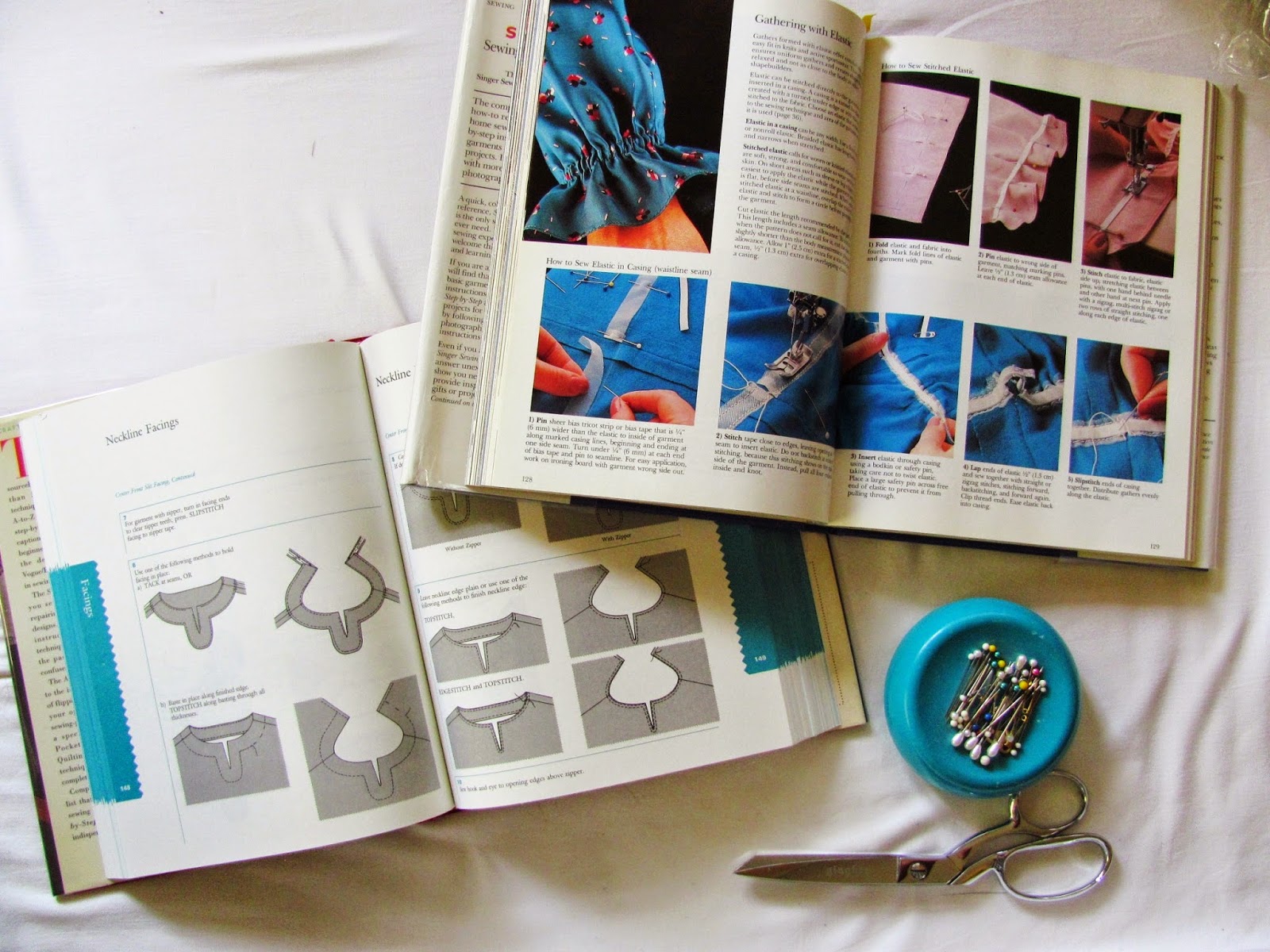
If you learned to sew in the late 1960's, you no doubt may own one or both of these books. The Reader's Digest Complete Guide to Sewing (upper right) is probably the best book on techniques ever published, and while it continues to be edited and published today, it is the older editions, crammed with clearly detailed drawing that make it an all time favorite, first published in 1976. Those early editions include a good chapter on men's tailoring as well as all the basics, including pages on textiles. More recent versions leave out many techniques in favor of big colored photos and simple 'how to' projects. Both costumers and fashion students rely on this hefty book for it's endless coverage of nearly every technique imaginable.

Less comprehensive, The Vogue Sewing Book, (lower left)was designed for more advanced dress making projects, and was known for it's 'couture' techniques. The back end also covers men's tailoring, and the front sections are devoted to showing alterations, style tips and fabric glossary. The first edition was published in 1970.


These two sewing manuals are more recent publications. The Vogue/Butterick: Step-by-Step Guide to Sewing Techniques (left)was published in 1989, and carries on the tradition of step-by-step illustrations to guide the sewist through specific techniques. The drawing are large, clear and have simple descriptions. Unique to book organization, the processes are arranged alphabetically, rather than by method or topic. This publication has had several editions, sometimes with name changes, but it is worth seeking one out, even the oldest ones like this.


Singer: Sewing Step-by-Step (upper right) was an innovative publication in its day, due to the inclusion of many fine tuned photos, rather than drawings or diagrams, that illustrated the sewing techniques. Published in 1990, it was part of a huge project under the Singer name to produce a wide range of step-by-step books on a many sewing topics. You will often find other books from this series, and all are worth owning.

Content for this Step-by-Step tries to cover alot of territory, so it is not a deep study of sewing, more a good companion for the newer sewist. Topics such as: activewear, tailoring and heirloom sewing are included. For those new to sewing, the photos are a big help, and answer many questions that a drawing might not. A large portion of the book is dedicated to home decorating projects, a good move on their part because this was becoming the newest trend in home sewing. So if you are also seeking some tips for curtains, drapes, and bed coverings, this publication may be helpful.

While it's impossible to specify only four great sewing books, I will put these up as four of the best sewing books published since 1970. Why 1970? That was probably the 'Golden Era' of home sewing. Using domestic sewing machines that were available with zig-zag and could sew knits, it was possible to create nearly anything desired. These sewing books were introduced into classrooms, workshops and sat on nearly every living room bookcase, and all four have value today for current sewing projects.

Do I have other books that I like to use? Yes, of course. I find that the pre-1970 sewing texts have a charm and provide insight into techniques we don't use often today, but might if we knew more about them. I will share some of those in another post. As for new books, I have used some, especially those published by the major textbook companies that are worth owning as well, so I will share those later too.


Tuesday, August 5, 2014

6 EASY TO SEW Shift Dresses


Finding a good easy to sew dress pattern for a new sewist can be frustrating. The styles can be bland and boring or the pattern design is really alot more complicated that it looks. Here are six dresses that can get someone new to sewing started with a dress that is cute, fashionable and fun to sew.

This blog post started with a letter asking me if I knew of a sewing pattern that might make up into a dress currently sold online. I took a look at the dress (by Jones New York) and saw that it is a perfect style for anyone to sew.


The basic silhouette is a loose fitting shift style (not fitted by darts or seam lines), and there are no set-in sleeves to worry about. The design has great 'blocking' with stripes used on the horizontal at the hem and shoulders, while they are vertical in the torso (how flattering!). I also like the idea of sewing a loose fitting shift dress as a first project because often the back zipper can be eliminated, making it a 'pull-over' style. The horizontal seam lines in the skirt and upper body will need to be added to some patterns.  Here are the best six sewing patterns to choose from.


The two dresses above stood out as being most like the original dress: Butterick 5211 and Vogue 1300. The Butterick dress is just about perfect for this project as it already shows a horizontal seam across the upper body, no back zipper, and short 'kimono' sleeves. Very similar, the Vogue dress has shorter 'sleeves'. The front cascade ruffle on this pattern can be eliminated by taping the two front pieces together to make a single front pattern piece. Both patterns will need to have the hem panel cut across the lower skirt.


A more curvacious figure will probably look better with bustline darts. These two patterns include those fitting darts. The pattern at the right, Vogue 8805 is ready to go, with both hem panel and upper body seams. The 'shoulder width' may be cut back to create a short sleeve if desired. McCalls 6465 on the left also has a hem panel. It differs in that set-in sleeves are used. The fit of a set-in sleeve is closer to the body and may appeal to someone who wants a more controlled fitting shift silhouette. Both have a seamless back and don't require a zipper.


These two dresses show vertical seam lines that will create a closer fitting dress that can be used for color blocking, but will not be suitable for stripes because of the several seams down the front.. Clearly they are for a more experienced sewist, Vogue 1390 and 8786. The style of 1390 still shows a strong horizontal banding at hem and shoulder, while it has vertical seam lines to create a better fit for more sizes. Vogue 8786 shows classic princess seam lines from a shoulder yoke that could be sewn in a contrast color with an added hemline panel. While this does have those additional princess seams, it is not a complex dress to sew.

So choose among these 6 shift dresses to find the style and degree of difficulty that you want. This could become your 'go to' dress pattern!

Here are two more blog posts you might be interested in that also talk about sewing dresses:

7 Best Sheath Dress Patterns with Vintage Style: Easy to Sew

9 Best Dress Patterns for Beginners: Easy to Sew

If you liked this blog post, follow me on Bloglovin to keep up with my most current articles on sewing and vintage fashion.  If you have any questions, or want to see a post on something specific, just drop me a note or leave a comment here.

You can also find me on:
Facebook - Pintucks
Pinterest - Pintuckstyle
Instagram - Pintuckstyle
Twitter - Pintucks


Sunday, August 3, 2014

Let's Talk About: Textiles and Fashion History


The history of fashion and textiles are interdependent. At at any given moment in time, apparel and fabrics available are tied to many factors such as: the economy, technical developments, design trends, labor issues and government policies. Having a good understanding of the history of textiles, from weaving methods to innovations, will give the fashion designer or vintage collector a better understanding of the relationship between fabric the the apparel worn at any time in history.

It may seem logical that the silhouette of a fashion trend is created through the selection of a specific textile weight, weave or knit, and fiber, but what is less known is that the availability of the essential fabric is equally important for a fad or trend to become widespread.

The study of twentieth century fashion often gives textile history and development only a brief glance. When dating a garment, knowledge of fibers and weaves is an important tool towards 'guessing' the decade or date of that fashion. All too often vintage collectors or sellers will state a garment's date in error due to the fact that the fiber or weave was not available as a fashion fabric during that era.

This can go even further: the dates for modern synthetic fibers are listed, but those dates give the patent or invention date, not the era when the mills were actually able to re-tool and create that fiber into fabric. Often the practical use of a fiber comes long after its invention. Wars, economic hardship, import duties and embargoes, and labor issues also affect the use of a specific textile as a fashion fabric.

To help unravel the history of modern textiles, TextileWorld.com has posted a terrific resource by Yancy S. Gilkerson on the story of textile manufacturing and development from 1887 through 1960. This is written in seven extensive chapters available online through their website. Current events, labor and manufacturing issues are included along with fashion industry influences. This story connects the apparel industry to textile manufacturing in a meaningful way, and is something everyone who works or plays with fashion history, costume or fashion design and wants to know more about it should put on their reading list.


HISTORY of TEXTILES from Textile World.com: chapter links


1887 - 1900: Textile Industry Meets the Demand of a Booming US Population

1900 - 1910: Mills Prolifereate and Profits Grow Until 1908 Panic

1910 - 1920: New Technology, Unions and World War I Leave a Mark on Textiles

1920 - 1930: The Roaring Twenties, Recession, Boom and Depression

1930 - 1940: The Country and the Industry Pull-out of the Depression

1940 - 1950: War Effort Brings Maximum Production and Post War Boom

1950 - 1960: The Quiet 50's: Most Revolutionary Decade


ILLUSTRATION
The title illustration shows examples of 20th century dress silhouettes that were dependent upon the type of textile available and popular during its era. From top left: Black 'shimmy dress' c. late 1980's or early 1990's (textile: spandex mesh), Calico print dress, c. late 1930's (textile: rayon), Tropical print sheath dress, c. late 1950's or early 1960's (textile: sateen weave cotton), black dress, c. early 1950's (textile: rayon chiffon), lavender dress, c. early 1980's (textile: polyester jersey knit), brown dress, c. 1970 (textile: polyester double knit)

This original article on fashion is part 10 of an education series on Fashion Design called "Let's Talk About:" that is original to Pintucks.

The contents of this article are the intellectual property of this blog. Please do not copy any content or images to another blog or digital media without contacting me first. I will ask that you link back to this article and give reference to this source within your feature. If you are using content or images for a research paper or project, please link back to this page in the traditional academic format, thank you!


Wednesday, July 2, 2014

Teach Yourself to Sew with Vintage Style Patterns


Learning to sew own your own can be fun when you work with patterns that fit your level of sewing skills. If you love vintage and retro styles, then carefully selecting vintage patterns can help to create new ‘vintage style’ looks. But authentic vintage pattern may be difficult to find in the right size, and often they need some alterations for a more modern fit.

Probably the easiest true vintage pattern group to look for are Simplicity sewing patterns from the 1960's forward with a "How to Sew" banner. These patterns have instructions that show details on sewing specific techniques. Often they were designed to be used in traditional home ec. classrooms, so the styles have few pattern pieces and involve simple or entry level sewing techniques.


Starting with a new pattern that is a modern copy of a vintage pattern is a short cut to getting that retro look you want to sew. Learning to sew means that the styles you choose shouldn’t be difficult for someone with beginning sewing skills. The blouses shown above are excellent examples of styles that have easy to sew design elements and limited techniques required.

If you want to sew a blouse or dress with buttons and button holes, prepare by doing some research in sewing books or online so that you understand how buttonholes are located. You may need to consult your sewing machine manual to learn how your machine settings can make those buttonholes for you.


I feature here two styles that have short kimono sleeves, making the bodices easier to sew since set-in sleeves are not required. The patterns in this post are just a small selection of retro or vintage style sewing patterns currently available through the major pattern companies. These patterns were selected for their very basic level of design, limited pattern pieces, simple darts, facings and ease of fit. Using vintage prints or stripes, cute retro styles are possible using these sewing patterns. Some of the patterns do require an entry level skill in fitting, so be sure if you are very new to sewing that you select a style with a looser fit.


Even dresses are possible, just seek out styles that have few pieces and can be easily fit to your size if that is required. Usually dresses have zippers, so that technique may be your main challenge in sewing a dress.

When looking further at sewing patterns, read the list below so that you have a good idea what sewing projects may be at your skill level. You might want to avoid the more advanced level projects, since those techniques or design elements may be too difficult to sew right now.

Level ONE: You are a new sewist, and need patterns that aren’t difficult or complicated. Look for:

Few pattern pieces
Loose fit “A” line shapes on dress or skirt
2 dart front: side seam darts or French darts
Sleeveles and collarless blouses or bodices
Wrap skirts (no zipper)
No waistband on skirt
Back zipper (no side or underarm zippers), with one side overlap (not centered)
Patch pockets
Fabrics that are stable, smooth and easy to cut, sew and press, such as light weight quilting cottons, woven stripes and plaids in cotton.

Level TWO: You have started sewing fashions and are ready to try some patterns that are a bit more difficult. You are ready for some of the more easy challenges in fitting patterns too. Look for:

Sheath dress: a more fitted one piece dress with 2 or 4 darts in front, 2 darts in back
Princess seamline dress: more fitted one piece dress with shaped vertical seamlines from underarm to hem, both front and back
Fitted bodice with darts in front (not tight fitting)
Fitted bodice with princess seamlines in front (not tight fitting)
Plain sleeves (no cuffs)
Sleeves with gathered shoulder or puff sleeves
Waistband on skirt
Side seam pocket
Loose pajama pants or elastic waist pants
Collar sewn in a dress neckline
Men’s bowling or Hawaiian style shirt (small collar, no back yoke, short sleeves)
Invisible zipper: hard to understand, easy to sew
Fabrics: add soft cottons or rayons to your selection, also consider embroidered fabrics and border prints

Level THREE: If you have been sewing for awhile, then projects that require good sewing techniques, fabric control and fitting are nice to work on. Look for:

Close fitting one piece dress with darts or princess seamlines
Close fitting bodice with 4 darts in front or princess seamlines, has skirt sewn to bodice at waistline
Collar on blouse, convertible collar
Straight skirt, fitted with darts or princess seam lines
Dress with a waistline seam
Buttons and buttonholes
Pants with waistband or yoke, back or size zipper
Fabrics: wool flannel, velvet and velveteen and denim have the level difficulty that would be good to try sewing

Level FOUR: These projects are for the sewist who is ready to sew just about any style. Fitting and complicated techniques in sewing should be great for this skill level

Sleeves with cuffs
Men’s style shirt collars
Men’s style shirt with back yoke
Fly Front zippers on pant or skirt
Side zipper on dress with sleeves
Fitted bodices such as corsets and formal wear.
Difficult fabrics that might be slippery, thick or hard to work with.

In my next post, I'll go over a few sewing resources to help you problem solve and learn new techniques.

Monday, June 23, 2014

Vintage Batik in 80s Styles: Fashion Inspiration


As the fabrics and styles of vintage 1980's fashion filter into current trends, some of the best looks today are from 80's design labels. Topping this summer's trends in both textiles and design are tropical batiks, indigos and tie dye. Simple wrapped sarongs and loose garments were seen then, much as they are today. This is a great look for anyone who sells vintage or wears it.


Boho gypsy looks with exotic accessories can be adapted into any wardrobe, age or size. It's about adding a bit of drama with a far away look.


As a vintage shopper or seller, look for:

TEXTILES: 1980's cottons, silks and rayons with unique indigo, batik and tie dye textile designs. Don't overlook embroidery and applique as well.

SILHOUETTES: Look for anything that wraps, drapes or is over-sized. For most, shoulder pads are 'out' so you may need to remove that detail.

LABELS: Joan Vass, Giordio Sant'Angelo, Armani, Kenzo, Zoran, Ellen Tracy, North Beach Leather, Issey Miyake, Anne Klein, and Donna Karan all produced styles that had this boho-gypsy look.


photos: Wayne Maser Spring 1986 "Vogue"

Sunday, June 15, 2014

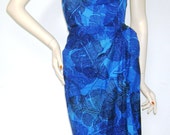
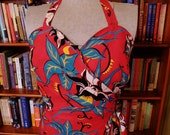
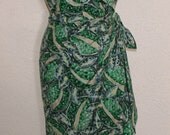
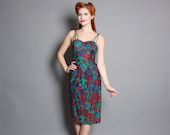
Summer Sarongs: Vintage Styles with a Tropical Tiki Look


RESERVED for mrandmrssparkle...
$250

1950s ALFRED SHAHEEN // Fish...
$375

1950s Dress / 50s Sarong Dre...
$475

Vintage 80s Does 50s Hawaiia...
$94

Peggy Wood late 1940's H...
$225

50s Hawaiian Sarong DRESS / ...
$325

Shaheen Style Hawaiian Tie S...
$82

Vintage 40s 50s Hawaiian KAM...
$1200

CHEEKY TIKI-Bold and Vibrant...
$295

Vintage 1940s 1950s McInerny...
$180

50s Hawaiian Sarong DRESS / ...
$225

Vintage 1950s Dress / 60s Ha...
$118

1950's Dress // Hawaiian...
$275

Vintage 50's Betty Higgi...
$339

1950's Vintage Polished ...
$165

1950s Vintage Green Hawaiian...
$250
Powered By Handmadeology


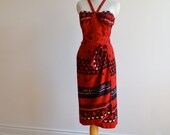
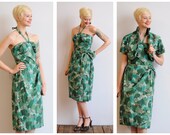
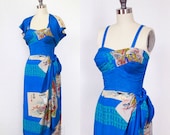
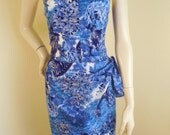
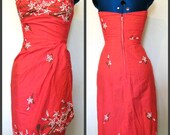
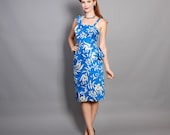
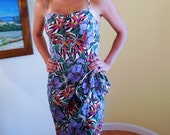
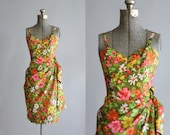
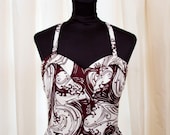
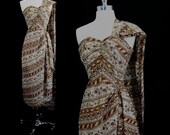
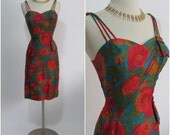
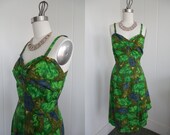
This is the perfect time of the year to shop for vintage sarongs. Whether you love the exotic originals by Alfred Shaheen or the many other Hawaiian fashion labels, you are sure to see some amazing textile prints and dramatic draped silhouettes.

This collection of vintage sarongs shows current styles now listed on Etsy. I had a great time looking through the listings for this type of dress. Along the way it also exposed me to some great vintage vendors who have other gorgeous items listed, so feel free to click on the photos to see a dress up close and visit some wonderful vintage shops too.

Tuesday, June 3, 2014

Anne Fogarty: New Start for a Vintage Fashion Label


The 'Anne Forgarty' label has long been a fashion find for vintage collectors. Always well made, distinctive and feminine, her designs captured the look for many women over the span of decades between WWII and the late 1970's.

More recently, this brand has been making news and co-founders have been preparing to revive this label in the style that it assumed during its height. Greg Halvorsen first contacted me to get my comments on the historical label. He has kept in contact with many of us who sell vintage or write about it online. Ivana Lo Stimolo, the other co-founder, has designed a set of debut dresses for this revival.

In the current fashion, these new dresses will be available via a Kickstarter pledge campaign that has a 30 day run only this month (June 2014). The Kickstarter site has a nice video and shows photos of each dress, so you can now see what design direction this new company is heading in, HERE.

While I feel that these new designs are lovely, and would be delighted to own and wear any one of them, as a fashion educator, I also would have liked the Kickstarter proposal to discuss the business aspect of this undertaking, so I am left with some valid questions: Who is the targget customer and where will she find this label for sale? What are the retail price points for the collection once it is developed each season? How many designs per season will the company ideally produce? Where will these be produced (off shore or in the US?).

So, my hats off to Halvorsen and Stimolo for venturing in the the fashion arena with a collection that more than hints of vintage quality and style. I hope your venture grows into a solid, dependable brand that we will love to wear.

While waiting for this collection to arrive, look for wonderful vintage items on Etsy under the "Anne Fogarty" vintage label.


Anne Fogarty, c. late 1960's, Cotton Pique


Anne Taylor, c. 1950's, Black Wool Crepe with Embroidery in Black